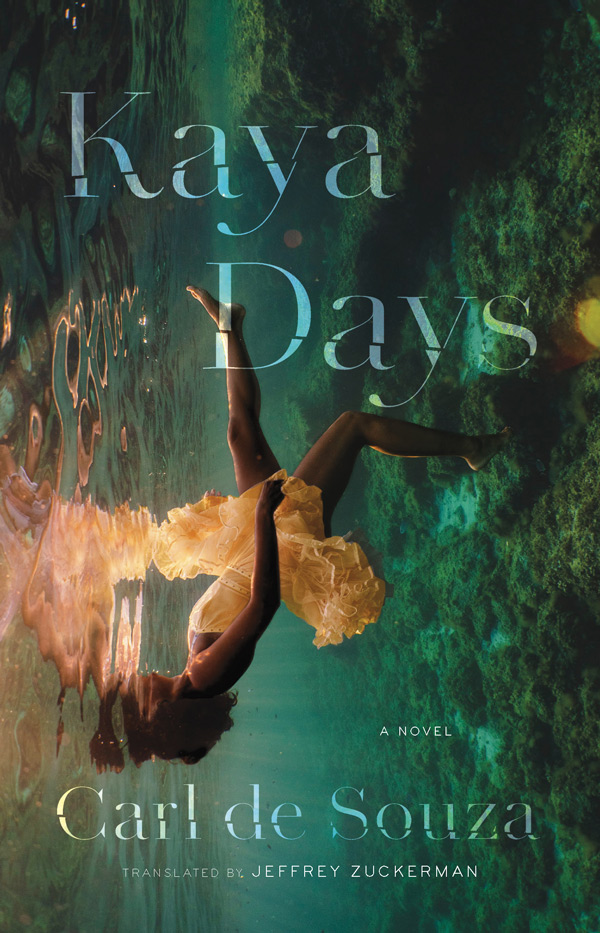
Kaya Days
$14.95
Additional Info
- ISBN: 9781949641196
- Size: 4.5" x 7"
- Pages: 178
- Publication Date: September 14, 2021
“This is no night for theater. All the drama’s outside.”
In 1999, the Mauritian seggae musician Joseph Réginald Topize, known as Kaya, was arrested for smoking weed while performing. Following his death in police custody days later, the island nation surged in a long-overdue demand for justice. In Kaya Days, the spirit of Mauritius and its many people—Hindu, Muslim, Chinese, Franco-Mauritian, and Creole—is distilled into a young woman’s daylong search for her younger brother, who has gone missing amid the chaos. Among burning cars and buildings, opportunists and revolutionaries, Santee rises into another world: a furious, brilliant one.
Praise
“De Souza’s prose, which includes significant amounts of Kreol in addition to French, mirrors his protagonist’s transformation: his sentences, in Jeffrey Zuckerman’s excellent, language-mixing translation, are compelling at the book’s start, but become downright hypnotic by its end. Kaya Days is a novella designed to be read in one gulp, and Jeffrey Zuckerman’s prose is propulsive enough to make the book nearly impossible to put down.” —NPR
“The rhythm of revolution beats through every sentence of this dazzling novel. In Jeffrey Zuckerman’s shimmering translation, the history and cultures of Mauritius form the background, and its sounds and smells the fore, of a rich portrait of a nation in a moment of change.” –Noah Mintz, Literary Hub
“A work that renders the electric immediacy of sensation with vividness, kinetics, and a musician’s aptness for rhythm… De Souza’s densely packed novel is a disorienting one, purposefully so. He jars his readers again and again through sudden shifts in character narration, transmogrifying objects and people, and juxtapositions of violence and jubilation.” —Laurel Taylor, Asymptote
“Electric… De Souza’s unpredictable, propulsive tale is a rip-roaring trip teeming with beauty, anger, possibility, and helplessness.” —Publishers Weekly
“A much-anticipated novel in translation from a Mauritian maestro… An electrifying portrait of a tiny island nation on fire.” —Kirkus Reviews
“A frantic, stream-of-consciousness novel in which a teenager comes of age in the middle of violent upheaval.” —Foreword Reviews
“De Souza gives us a superb portrait of a town in riot…a mythical journey through a sort of hell.” —The Modern Novel
“I read Kaya Days in a single setting—in between and on flights—and found it to be dreamlike and evocative, a dramatic, rich and potent contribution to the thankfully multiplying literature from and of our oceanic realms. It was such a delightful companion.” —Yvonne Adhiambo Owuor, author of The Dragonfly Sea
“Carl de Souza’s Kaya Days is a searing, urgent, far-seeing dispatch that imprints the reality of Mauritius, at odds with its picture-postcard views, on the global consciousness. Carl de Souza is a formidable voice in Mauritian literature; his account is an indictment and a plea for understanding among its communities. Mauritius, so often depicted as a paradise of pastels, endured these days of upheaval in the wake of the Creole singer Kaya’s death as two communities forgot their fellow-feeling and broke out in violence. Carl de Souza’s prose is a warning to us all: no matter where we are, we are each inhabitants of an island, and if we don’t draw the right lessons, we may find ourselves in fire and blood as well.” —J. M. G. Le Clézio, winner of the Nobel Prize for Literature
“It’s books like Kaya Days that remind me why I commit my waking hours to foreign literature. I’m hard pressed to find something similar to Carl de Souza anywhere in American fiction—his haunted stylings, his wanderings, his dense depictions of violence that feel both immediate and unreal. Santee navigates a furious island in the midst of an uprising, and through Santee we see an unbelievable spectrum of characters and their sorrows. Jeffrey Zuckerman’s ability to translate de Souza’s French and Creole blend into English is a feat all its own. It’s actually Zuckerman’s keen attention to the dialects of Mauritius that makes this text so uniquely situated against its peers, and gives us a sort of roadmap to this island in the Indian Ocean. Let’s praise the people who have ushered de Souza’s work, for the first time in English, into our hands and onto our shelves.” —Spencer Ruchti, Third Place Books (Seattle, WA)
“Beautiful, evocative novel that brings to life the island and people of Mauritius.” —Kerry Barringer, Little City Books (Hoboken, NJ)
“Kaya Days strives to recreate not so much a reality as a truth… [Carl de Souza’s] fluid yet dense prose conveys, with flecks of poetry, an extraordinary journey of the soul set, over the course of Kaya Days, against a backdrop of upheaval. His characters live through these events and remain themselves, even as they endure the aftershocks of riotous violence. His novel, which has to be read again and again to fully comprehend its scope, is a rock thrown into seemingly calm waters that will make waves for a long time after.” —Le Soir (Belgium)
“Even more than [Mauritius’s] ethnic tensions, which he delineates meticulously, Carl de Souza trains his gaze on the humanity of these beings abandoned by all and guides us deep into a world with no limits left.” —L’Express (Mauritius)
“Through the lens of femininity and childhood, the story delves in an unprecedented manner into the themes of innocence and cruelty. The striking prose interweaves a frenetic style and a rising, almost-shrill rhythm in a dreamy way. The achingly personal relationships of these stupefying days reveal a deep-rooted perspective of the island’s history.” —L’Humanité (France)
“[Kaya Days] lays bare clashes of communities, brutalities and kindnesses across generations, pleasures and escapes through Carl de Souza’s attentive, vivid prose.” —Libération (France)
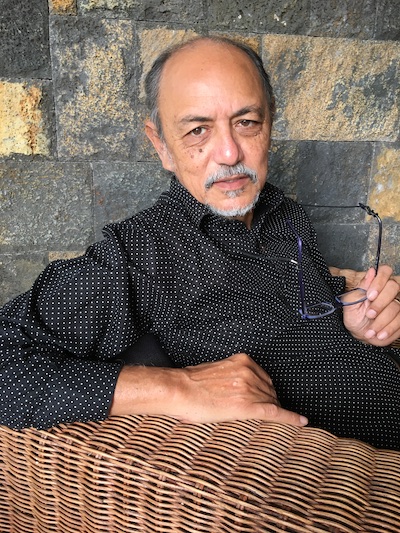
Carl de Souza
Carl de Souza is a writer born and living in Mauritius. He graduated in biology and maths at the University of London before pursuing a career in education at various levels. He has led an intense sports life, mainly in badminton, which is the background of one of his novels. He has published short stories and six novels in France, of which Kaya Days is his first to be translated into English.
Books
Carl de Souza is a writer born and living in Mauritius. He has published short stories and six novels in France, of which Kaya Days is his first to be translated into English.
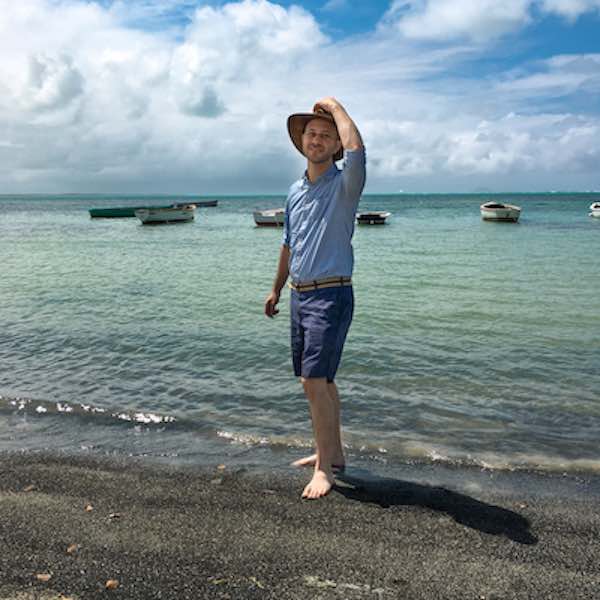
Jeffrey Zuckerman
Jeffrey Zuckerman is a translator of French and the Digital Coordinator at Music & Literature Magazine. His translations include Ananda Devi’s Eve Out of Her Ruins, the diaries of the Dardenne brothers, and Jean Genet’s The Criminal Child. He has also contributed shorter pieces to Frieze, The New Republic, The NYRDaily, The Paris Review Daily, The White Review, and VICE. Jeffrey studied English literature and literary translation at Yale University, and has served as a judge for the PEN Translation Prize and the National Translation Award. He is a recipient of a PEN/Heim Translation Fund grant for his ongoing work on the complete stories of Hervé Guibert.
Books
Jeffrey Zuckerman is a translator of French, including the Mauritian novelists Ananda Devi, Shenaz Patel, and Carl de Souza, whose Kaya Days has been shortlisted for a PEN Translation Prize. In 2020 he was named a Chevalier in the Ordre des Arts et des Lettres by the French government.
Excerpt
The night before, he had been with his friends, everything had been going swimmingly, they had been raiding a gas station, had knocked over no less than six cars and to top it off, out by Chebel, they’d tackled a bus and the police hadn’t been able to move its burnt carcass until around midnight. He was helpless as he watched her pry off her shoes and walk barefoot on the cobblestones. The coolness soothed her and she slowed her pace: there was no rush anymore. If you don’t want to, that’s okay, she said. He looked around. The women were going right past them, talking loudly, the oldest one was scolding the others for having rushed, for not having taken the time to pick and choose. The others were laughing under their breath and pushing the cart this way and that. It was sagging with frozen foods, chickens, and cuts of beef dripping a trail along the ground. If they followed this blood-tinged trace, would they reach some source of plenty? He hardly seemed to need this lead. She let him take her hand this time and, together, they crossed Royal Road. He led her straight to the Arcades. Other people were coming out, jangling and clattering their carts as well, but rather than go right into the crowd in front of the grocery store, the guy turned off toward the clothes shops. Here, everything was still calm, and a subdued light bathed the fashion shop’s slender mannequins and bouquets of dried flowers. Santee rushed over to look. Multicolored tee-shirts hung off a dead tree and on a stretch of sawdust standing in for a beach, as if they had washed in with the tide, were pink and green and yellow shoes and pumps, sunglasses. In the background was the frozen burble of an emerald sea.