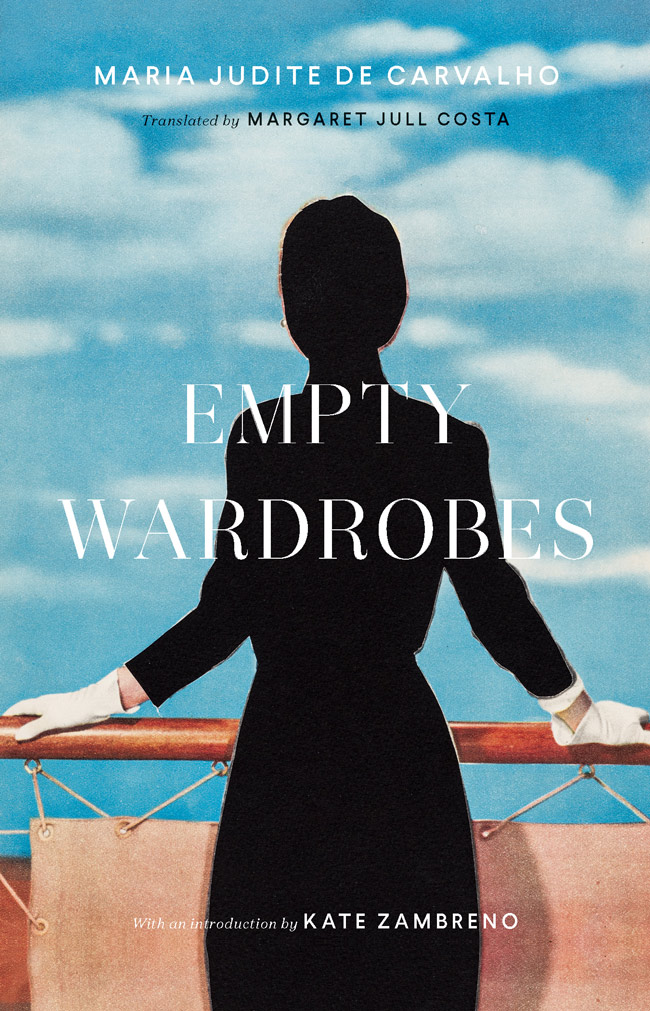
Empty Wardrobes
$14.95
Additional Info
- ISBN: 978-1-949641-21-9
- Size: 4.5" x 7"
- Pages: 208
- Publication Date: October 12, 2021
“Executed as precisely and without sentiment as an autopsy… There is no doubting the authenticity of Carvalho’s vision and the originality and severity of her voice, as scathing and pitiless in her depiction of ‘empty’ women as in her depiction of oafish swaggering machismo.” —Joyce Carol Oates, The New York Review of Books
For ten years Dora has ritualistically mourned her husband’s death, a pointless ritual that forced her to rely on support from old friends and acquaintances. Her beloved husband, a “Christ” so principled he rejected any ambition whatsoever as a construct of a corrupt society, succeeded only in leaving Dora and their daughter with nothing. When her mother-in-law reveals a shattering secret about their marriage one night, Dora’s narrative of her own life is destroyed. Three generations of women—Dora, her daughter, and mother-in-law—must navigate a world that has been shaped by the blundering men off in the distance, figures barely present who nonetheless define the lives of the women they would call mother, wife, or lover.
Narrated through the gritted teeth of an acquaintance, Empty Wardrobes—Maria Judite de Carvalho’s cutting 1966 novel, translated from Portuguese for the first time by Margaret Jull Costa and introduced by Kate Zambreno—is a tale of women who are trapped within the quiet devastation of a patriarchal society and preyed upon by the ambient savageries that perch in its every crevice.
With an introduction by Kate Zambreno.
Praise
“Empty Wardrobes will give you a sense of domestic life under the dictatorship: In precise, unsentimental prose, it tells the story of three generations of women overshadowed by the death of a patriarch.” —Djaimilia Pereira de Almeida, The New York Times
“A book about how men betray women, and how women betray each other…a work that does not hesitate to expose the cruelties and power grabs that lie beneath marriage, and how quickly society discards aging women.” —Rhian Sasseen, The Paris Review
“The specter of the patriarchy looms over this mid-twentieth-century tale like depression itself. With the astringent wit of Natalia Ginzburg, Empty Wardrobes is a spellbinding book of domestic disorder that sparks with bitterness and humor.” —Lauren LeBlanc, The Observer
“Margaret Jull Costa’s translation hits not a single false note. The text has an antique finish without being dated… The novella manages to cast the eye of a worried oracle on an entire nation.” —Asymptote
“Translated from Portuguese by the award-winning and prolific translator Margaret Jull Costa, the novel is rendered in clear, finely wrought prose. Not a single word feels wasted or misplaced… One of those rare, transcendent works.” —The Rupture
“Superb.” —The Modern Novel
“The first by this towering Portuguese novelist to be translated into English… A still, luminous book whose precise characters evoke broad truths about the human experience.” —Kirkus Reviews, starred review
“Gracefully translated by Margaret Jull Costa, Dora’s story is illuminating, inspiring, and heartbreaking in equal measures. Fans of Anne Tyler, Marian Keyes, and Christine Féret-Fleury will find themselves absorbed in the novella’s sparse but evocative prose.” —Booklist
“Sharp… This unearthed story leaves readers with much to chew on.” —Publishers Weekly
“Its timeliness is both enlightening and depressing…this novel shows us women who see their restraints but struggle to reach beyond the men and political institutions that uphold them.” —Monica Cardenas, Litro Magazine
“A remarkable, necessary novel about women disposed of by men, about isolation and suspension and damage, with an acute perceptiveness that will pierce your mind. Dora, Manuela, Ana, Júlia, Lisa. These women will remain long after the middling men who have abandoned them fade away, as will Empty Wardrobes, finally, thankfully, translated into English.” —Amina Cain, author of Indelicacy
“A compact, merciless tragedy… This is a hilarious and devastating novel of a traditional Catholic widow’s consciousness, encased like ambered resin in the ambient cruelty of patriarchy, an oppression even more severe in the God, Fatherland, and Family authoritarianism of the Salazar regime in Portugal. A work like this, set in the regime of a dictator who weaponized Catholicism and ‘family values,’ is by its very nature deeply political.” —from the introduction by Kate Zambreno
“Maria Judite de Carvalho will always be at the forefront of Portuguese literature, whether now or in two or three generations’ time.” —A Capital
“Maria Judite de Carvalho’s fiction…provides us with a vivid portrait of our times, especially in the strange, slippery area of everyday life…” —Expresso
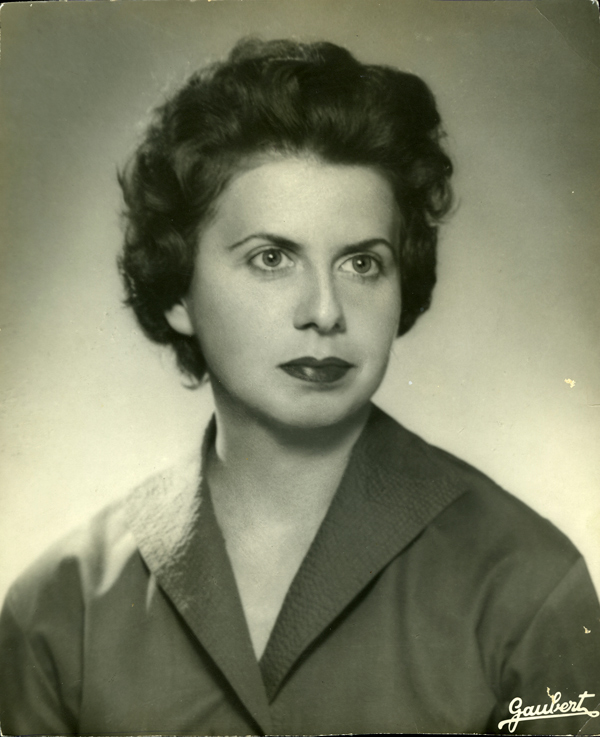
Maria Judite de Carvalho
Maria Judite de Carvalho (1921–1998) published nine collections of short stories, a novella, and two collections of crónicas over her lifetime. Widely celebrated in Portugal, she spent her career in journalism, working as an editor and columnist, and was also known for her French translations and paintings. Two Lines Press is the first to make her books available in English.
Books
Maria Judite de Carvalho (1921–1998) published nine collections of short stories, a novella, and two collections of crónicas over her lifetime. Widely celebrated in Portugal, she spent her career in journalism, working as an editor and columnist, and was also known for her French translations and paintings. Two Lines Press is the first to make her books available in English.
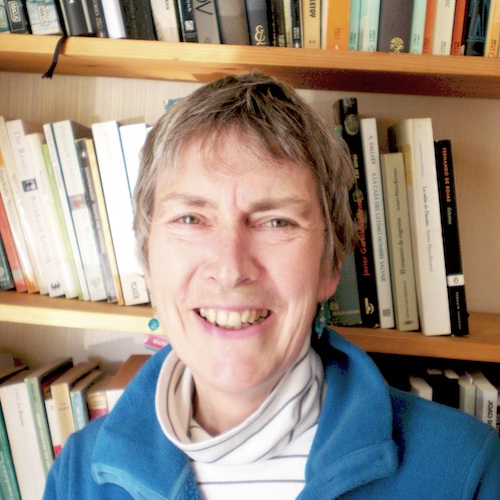
Margaret Jull Costa
Margaret Jull Costa has been a translator for over thirty years and has translated the works of many Spanish and Portuguese writers, including novelists Javier Marías, José Saramago, Bernardo Atxaga, Maria Judite de Carvalho and Eça de Queirós, as well as poets Fernando Pessoa, Sophia de Mello Breyner Andresen, Mário de Sá-Carneiro, and Ana Luísa Amaral. Her work has brought her many prizes, among them, in 1997, the International IMPAC Literary Award, for A Heart So White by Javier Marías; in 2008, the PEN Book-of-the-Month-Club Translation Prize and the Oxford Weidenfeld Translation Prize, and in 2018, the Premio Valle-Inclán for On the Edge by Rafael Chirbes.
Books
Margaret Jull Costa has worked as a translator for over thirty years, translating the works of many Spanish and Portuguese writers, among them novelists: Javier Marías, José Saramago, Eça de Queiroz, and Teolinda Gersão, and poets: Fernando Pessoa, Sophia de Mello Breyner Andresen, Mário de Sá-Carneiro, and Ana Luísa Amaral. Her work has brought her many prizes, most recently the Premio Valle-Inclán for On the Edge by Rafael Chirbes.
Excerpt
It was a spring day which, apparently at least, began and ended like any other spring day: that is what she would have said or, more likely, thought, because she was always a woman of few words. She never said more than was strictly necessary – the bare indispensable minimum – or else she would begin to say only what was necessary, then quickly grow tired, or stop mid-stream, as though she suddenly realized that it wasn’t worth going on and was a waste of effort. She would sit quite still then, her face a blank, like someone poised on the edge of an ellipsis, or standing hesitantly at the sea’s edge in winter, and at such moments, all the light would go out of her eyes, as if absorbed by a piece of blotting paper; for all I know, she may still be like that, because I never saw her again. For a long time, I failed to understand that these lapses into unconsciousness, which is what they were, invariably led her back to the same place, or, rather, to the same person, to the same tarnished image of that person, because, as I said, she was not a woman given to confessions. Words were of no use to her to explain her thoughts, to polish or disguise them, which is what most of us do. She would use them, and then only as a last resort, to say something urgent (I’m referring, of course, to the time before the party her daughter Lisa gave for her friends. After that, it would be another story). And when she absolutely had to speak, she would fall silent immediately afterwards (or, as I said earlier, stop halfway), and it wasn’t only the light in her eyes that was switched off then, for her body, too, would droop slightly, as if someone had turned off the current – which, however low-voltage, at least kept it active – as if her body had forgotten its original upright posture. When this happened, she wasn’t really there, although no one knew where she was or who she was with. In fact, such a thought probably wouldn’t occur to anyone, because her face betrayed none of this, only her eyes and her hands, but who would notice either her eyes or indeed her hands, which lay half-open on her lap, like shells washed up on the beach? Sometimes when I was with her, I thought that perhaps what she needed was a good shake or, better still, an x-ray, so that we could see if she did actually have more inside her than just lungs and a digestive system.