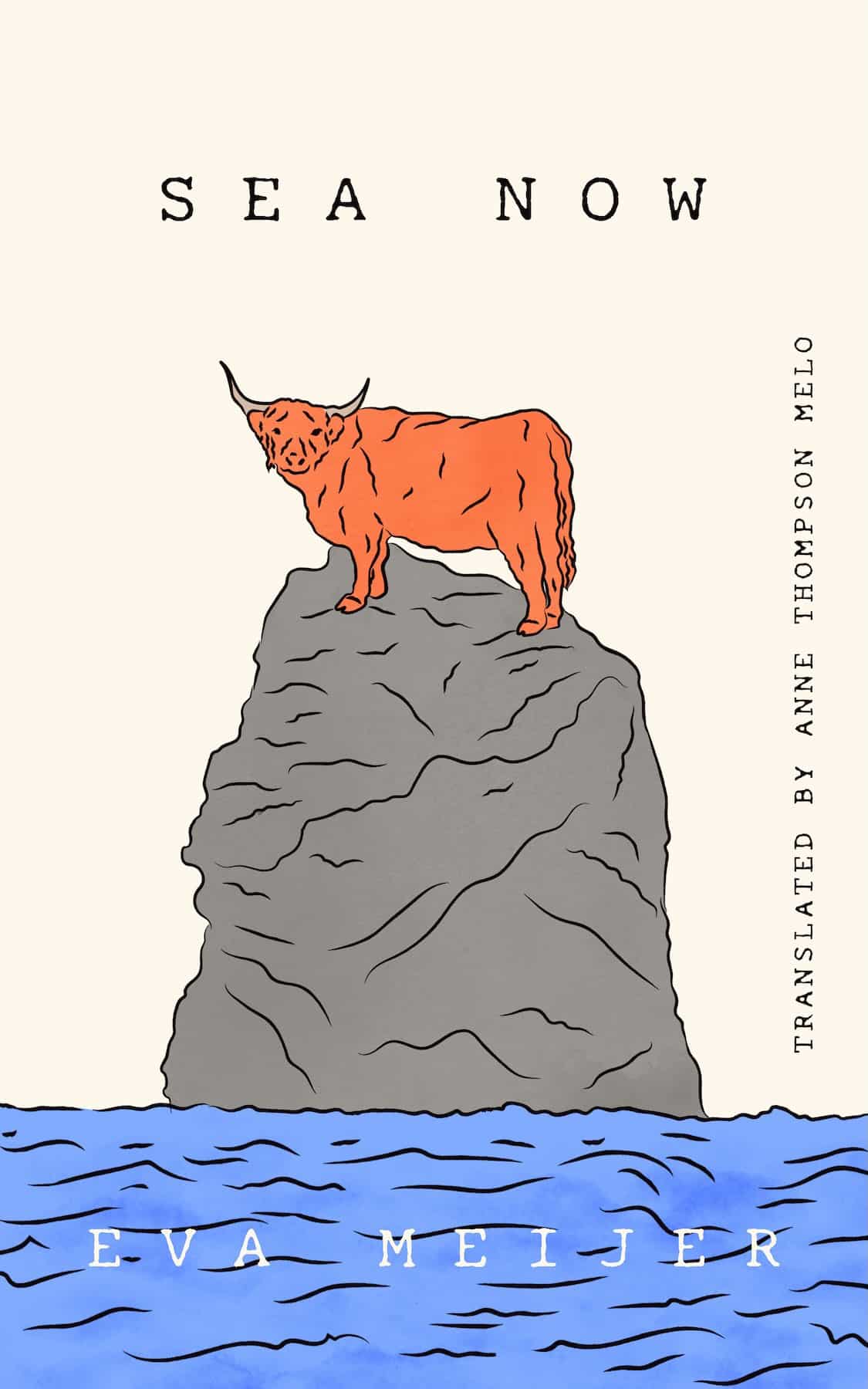
Sea Now
$18.00
Additional Info
- ISBN: 9781949641851
- Size: 5" x 8"
- Pages: 180
- Publication Date: October 14, 2025
Winner of the Stevns Translation Prize
What happens when the delicate balance of nature tips in favor of the sea.
The catastrophe that everyone knew was coming has arrived—the dykes are breached, the tideline rises a kilometer a day, and the citizens of the Netherlands are forced into gyms and shelters in Germany and Belgium. The foxes and rabbits head inland across the dunes. The politicians make empty speeches and fret the optics. The Hague—“the center of peace and justice”—slips beneath the rising water. Online retailers do flash sale promotions on disaster kits. There is violence and looting, but some people are too tired to start over again and simply walk into the rising tide.
Not willing to simply move on, three women get into a small boat and ride back out over the flooded cities, looking for loved ones they know are likely drowned. On the way, they witness a world retaken by seabirds, whales, and kelp forests. The sea has spoken, and there’s nothing left to be done but listen.
Philosopher and cross-species linguist Eva Meijer’s new novel redefines both nature writing and climate fiction by bringing the power and resilience of the natural world to the fore.
Praise
“It isn’t just a human story, but one of overfished fishes learning not to be afraid; of shellfishes, birds, rabbits, and ‘sea-being’; of horses discovering that ‘what they mean by freedom [is] the seaweed that moves inside you’; of whether, like mussels and octopuses, ‘the sea dreams’… In its regard for other-than-human Earthlings—acknowledging that they exist, that our lives and stories are also theirs, that they engage in a porous exchange—Sea Now joins Meijer’s rich oeuvre of novels and philosophical meditations on multispecies coexistence.” –Mandy-Suzanne Wong, Asymptote
“Sea Now is a poetic, light-footed, and in light of the current crises in the world, an awfully topical document.” –De Telegraaf
“What characterizes Meijer is that she also pays attention to animals. Seagulls, rabbits who massively flee from the dunes. And also the sea gets a voice in the book. For years, Meijer has been concerned with ecology and climate change and with nature’s place in our thinking and our society.” –Trouw
“An original, intriguing story… A story that approaches a relevant theme in today’s society, in beautiful language, and with characters that increasingly come to life. An exceptional novel.” –Friesch Dagblad
Additional Materials
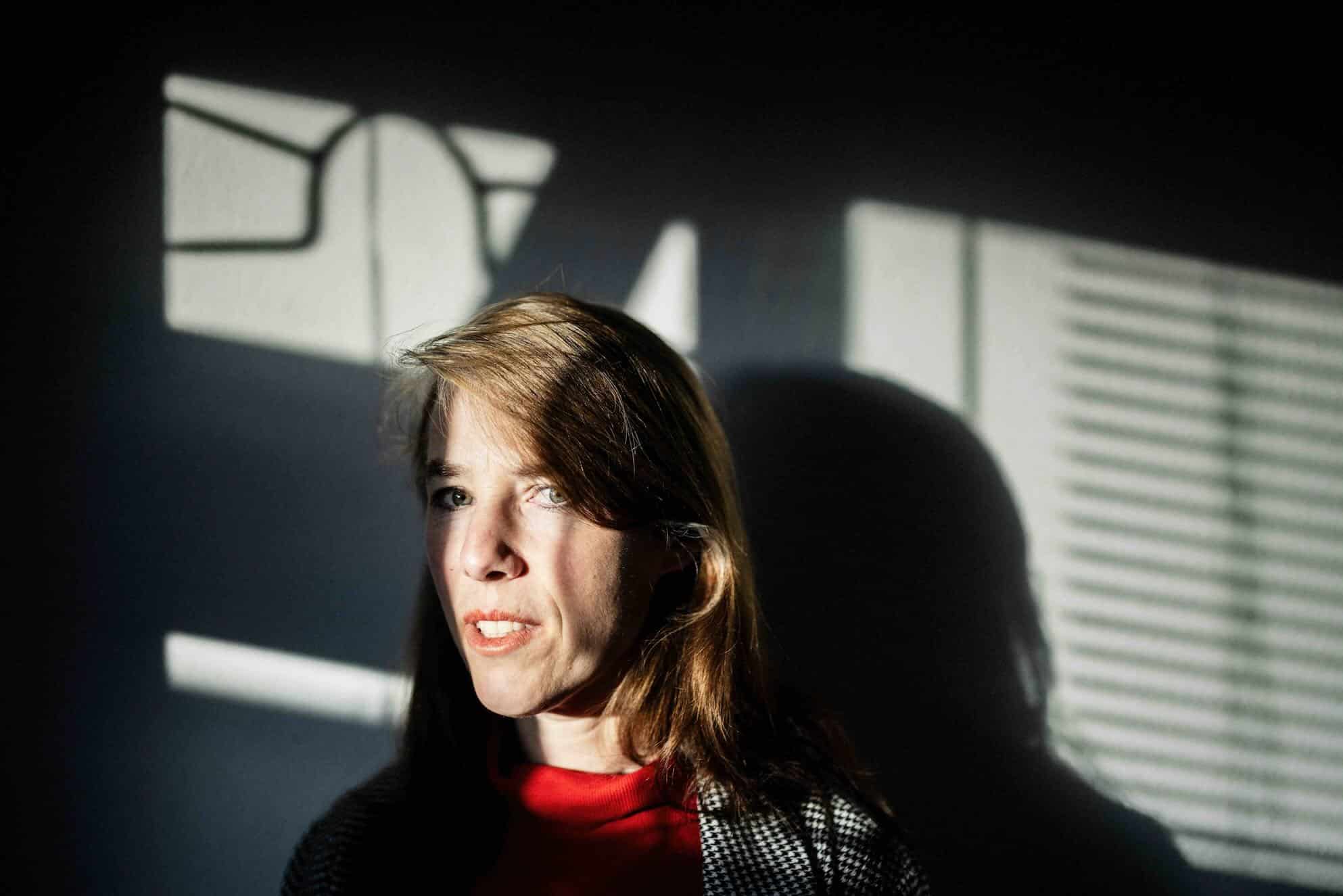
Eva Meijer
Eva Meijer is a visual artist, writer, philosopher, and singer-songwriter. They wrote more than twenty books, including novels, poetry and philosophical essays. Their writing has been translated into over twenty languages. Politics, madness, nonhuman animals, and language, including silence, are recurring themes in their work. Meijer works as a postdoctoral researcher at the University of Amsterdam, writes for Dutch newspapers, and is a member of the Multispecies Art Collective.
Books
Eva Meijer is a visual artist, writer, philosopher, and singer-songwriter. They wrote more than twenty books, including novels, poetry and philosophical essays. Their writing has been translated into over twenty languages. Politics, madness, nonhuman animals, and language, including silence, are recurring themes in their work. Meijer works as a postdoctoral researcher at the University of Amsterdam, writes for Dutch newspapers, and is a member of the Multispecies Art Collective.
Anne Thompson Melo is a Scottish-based translator who studied Dutch and German and spent many years translating brochures for a German car manufacturer. She was longlisted for the John Dryden Translation Prize in 2022 and shortlisted for the Goethe-Institut Award for New Translation in 2023. Winning the 2024 Peirene Stevns Translation Prize gave her the opportunity to work on her first literary translation.
Excerpt
It took a while for people to wake up to what was happening.
To be fair, that first day it wasn’t really clear that anything much was happening. Some days the sea just comes further up the beach than others, and besides the dykes were high and wide enough. The odd beachcomber had a feeling that something wasn’t quite right. But what? They’d forgotten all about it by the time they got home.
The second day, the tide line almost reached the dunes at several points along the coast. The mayors of various seaside towns called in the experts from the government water agency: men with cases who turned up in pairs, took their readings and left again. They couldn’t comment on the situation – the readings needed to be analysed first. In the meantime, people began to talk that second afternoon about an unusual natural phenomenon – because that’s what they called it at the start: an unusual natural phenomenon. A restaurant owner in Scheveningen took a photo and posted it online. A metal detectorist in Domburg did the same. Had high tide ever lasted this long before? Was this the rising sea level they kept warning about?
It’s a little too early in our story to start examining the sea’s motives, but perhaps a brief character sketch wouldn’t go amiss here. To anyone standing on the beach looking out at it, the sea appears to go on for ever. Yes, there’s a horizon, but that shifts as we change position, it’s just an optical demarcation. The sea is not alive, but it’s not dead either – a state most people find hard to get their head around, however accustomed they may be to its presence. The sea is made up of water, just like people are, only it has no skin. Its colour and shape are determined by what surrounds it: the sun, the clouds, the wind. People are shaped by the weather and the landscape too, but they are not quite so inclined to change with their fluctuating surroundings. Not the people of the Netherlands who are at the heart of this book, at any rate.
The sea doesn’t think or feel, at least not in a way that people are able to recognize with their own thoughts and feelings – which are inevitably limited by the bounds of their physicality and their capacity for imagination. A poet would point here to the polyphony and fluid nature of feelings, a philosopher to the importance of recognizing the materiality of human existence, but that wouldn’t bring us any closer to the sea. Anyway, as already intimated, more of the sea later.