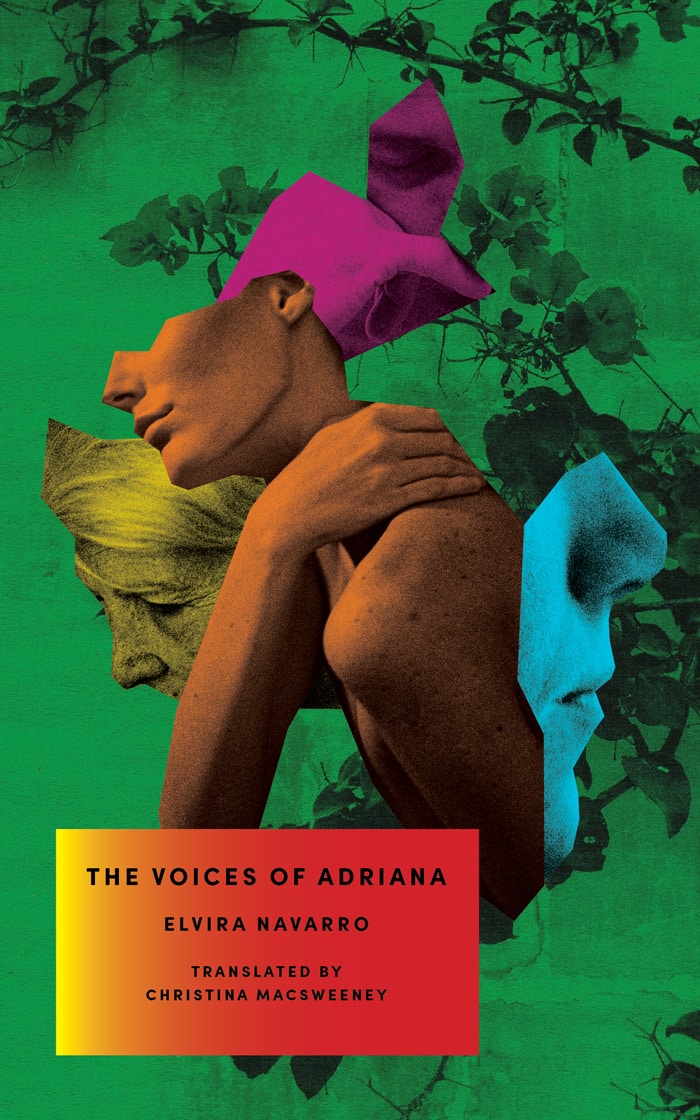
The Voices of Adriana
$17.00
Additional Info
- ISBN: 9781949641738
- Size: 5" x 8"
- Pages: 178
- Publication Date: February 18, 2025
A thrilling metafiction about grief, the internet, and the difficulty of knowing others, The Voices of Adriana combines the psychological acuity of Marguerite Duras with the creative possibility of One Thousand and One Nights.
Adriana has become obsessed with her father’s online dating. Recently widowed, he’s on a self-destructive, manic search for a partner to accompany him through his twilight years. At the same time, her life as an isolated grad student feels unreal, and to fill the void of her mother’s death, Adriana begins writing, trying on different voices. She builds worlds from the online profiles of her father’s flings, that is until more fundamental voices—those of her grandmother and mother—begin calling out to her in the night. The Voices of Adriana, the latest from Spanish writer Elvira Navarro, is an innovative novel about grief and how we might reanimate the voices of those we’ve lost, not as ghosts, but as living parts of ourselves.
Praise
Winner of the 2023 Cálamo Special Prize
“Death, online dating, ghosts and voices…this metafiction is innovative, surreal and dark, with a lot to say about grief, care, memory and love.” —Ms. Magazine
“A relentless novel about the loss of lightness, about what to do with—or how to measure—the weight that remains. Brutally honest yet mysteriously elusive, with scalpel-like precision and poetic sharpness, Elvira Navarro explores the dialectic of care, its vulnerabilities and its legacies.” —Andrés Neuman, author of Traveler of the Century
“The Voices of Adriana is an extraordinary novel, in which a woman speaks to us from her ancestral tempest… Loneliness and family, the search for love, and a resurfacing past all intertwine in this extraordinary story that oscillates between social criticism and an exploration of the primitive forces of existence. Elvira Navarro is one of the greatest Spanish writers of today. A precise and meticulous surgeon of the heart’s most hidden emotions.” —Manuel Vilas, author of Ordesa
“In Elvira Navarro’s stunning, bewildering novel, our loved ones are simultaneously gone without a trace and present in every moment. ‘Just how far do the dead travel with us?’ Adriana asks. The Voices of Adriana is an audacious metatextual attempt at finding out.” —Los Angeles Review of Books
“Navarro’s novel can be seen as reclaiming a woman’s right to interrogate her own mind. It also speaks to how we create narratives for ourselves in order to survive what life throws our way. That Adriana continues to acknowledge the uncertainty of these stories, even as she finally finds the strength to tell them, is a powerful admission of our need to grow and adapt. We can’t always know how we should face what lies ahead, but we need to heed the advice of any voices that are willing to help.” —Southwest Review
“A book that hides its eeriness in poetry, coming around corners with sharpened edges and precise screams.” —Bex Frankeberger, Books Are Magic (Brooklyn, NY)
“Darkly humorous and sad, the first part of The Voices of Adriana follows its eponymous character through the surreal and uncomfortable process of becoming a caretaker to her aging widower father while he attempts to find love on the internet. The second part finds Adriana attempting to process the grief brought on by the loss of her mother and maternal grandmother and the differences between their three lives. She writes a conversation in their voices, which at times turns meta with the “characters” (her mother and grandmother) telling Adriana that she’s getting their voices wrong. I loved this part, it is so unique and such a reminder to talk to those we love while we have the chance.” —Laurel Kane, White Whale Bookstore (Pittsburgh, PA)
“The author’s high-mileage ease in creating voices for everyday strangers versus the congested struggle of putting the voices of loved ones down on paper (especially when those beloved voices are incessantly, omnipresently critical, yet all-in-all just YOU putting YOUR words in THEIR mouths in YOUR your head): broken up here in three parts, we ride with the author, taking three go’s at it, A-Plussing all the way, some light tunes on the grief coupe’s AM/FM radio, as each bumpy road leads to semi-recovery and/or self-discovery.” —Ian McCord, Avid Bookshop (Athens, GA)
Praise for Elvira Navarro
“This author’s literary talent is a natural gift…the subtle, almost hidden, true avant-gardist of her generation.” —Enrique Vila-Matas, author of Mac’s Problem
“Navarro, a Spanish writer, deploys surrealism to comic, haunting effect.” —The New York Times
“[Navarro] is a master anatomist of class and, particularly, money—both its power and the maddening indignity of its lack.” —Los Angeles Times
Additional Materials
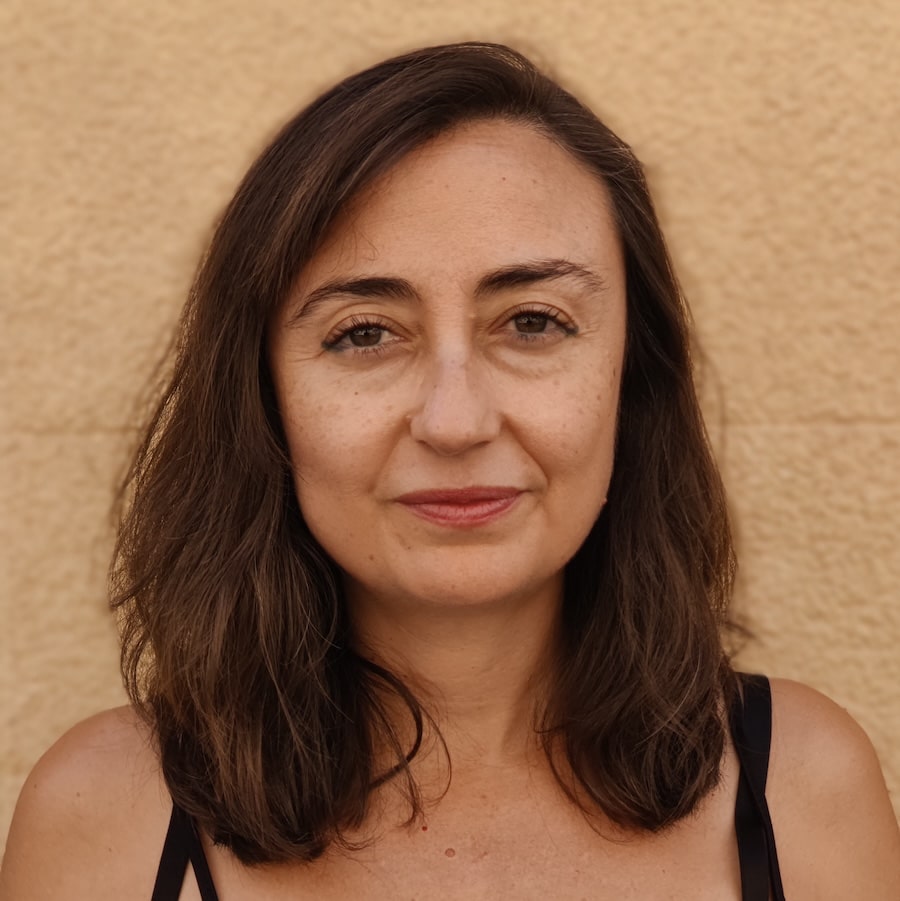
Elvira Navarro
Elvira Navarro (Huelva, Spain, 1978) has published both novels and short stories. Her novel A Working Woman, which addresses the impact of the economic crisis on the contemporary female experience, has established her as a leading voice in Spanish literature. She has been the recipient of numerous significant accolades in Spain, including the Jaén Novel Prize and the Andalusian Critics’ Prize. Additionally, Granta magazine has identified her as one of the twenty-two most distinguished Spanish writers under the age of thirty-five. Her collection of short stories, Rabbit Island, has been nominated for the 2021 National Book Award for Foreign Literature. Her most recent novel, The Voices of Adriana, has been awarded the 2023 Cálamo Special Prize. (Photo Credit: Rubén Bastida)
Books
Elvira Navarro (Huelva, Spain, 1978) has published both novels and short stories. Her novel A Working Woman, which addresses the impact of the economic crisis on the contemporary female experience, has established her as a leading voice in Spanish literature. She has been the recipient of numerous significant accolades in Spain, including the Jaén Novel Prize and the Andalusian Critics’ Prize. Additionally, Granta magazine has identified her as one of the twenty-two most distinguished Spanish writers under the age of thirty-five. Her collection of short stories, Rabbit Island, has been nominated for the 2021 National Book Award for Foreign Literature. Her most recent novel, The Voices of Adriana, has been awarded the 2023 Cálamo Special Prize.
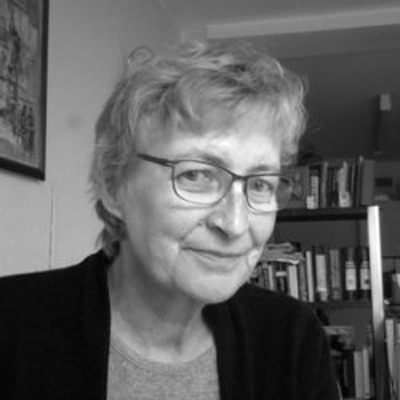
Christina MacSweeney
Christina MacSweeney has an MA in Literary Translation from the University of East Anglia. Her work has been recognized in a number of important awards. Her translation of Valeria Luiselli’s The Story of My Teeth was awarded the 2016 Valle Inclán Translation Prize and also shortlisted for the Dublin Literary Award (2017). Her most recent translations include fiction and nonfiction works by Daniel Saldaña París, Elvira Navarro, Verónica Gerber Bicecci, Julián Herbert, Jazmina Barrera, and Karla Suárez. She has also contributed to anthologies of Latin American literature and published translations, articles and interviews on a variety of platforms.
Books
Christina MacSweeney’s work has been recognized in a number of important awards, and her translation of Valeria Luiselli’s The Story of My Teeth was awarded the Valle Inclán Translation Prize and also shortlisted for the Dublin Literary Award. Her most recent translations include works by Daniel Saldaña París, Elvira Navarro, Verónica Gerber Bicecci, Julián Herbert, and Karla Suárez.
Excerpt
|
When she was working, Adriana opened Twitter every half hour. There was rarely anything interesting. But even if she only took a quick look, as if skimming the timeline was a sort of reflex action, she’d sometimes find a tweet that seemed to be a response to her own thoughts; so, for example, one morning when she was reflecting on her father’s illness, she came across: “Death stalks your whole life. You can’t escape it. Why not become its apprentice?” It was an advertisement for a videogame in which death has an apprentice. She clicked on the link to view the cover. The Grim Reaper, with the look of a pissed-off pixie, carried a gleaming scythe and was surrounded by zombie-like, blue spirits with sunken eyes. In those images, the spirit and putrid flesh merged in an agreeable sort of way. Putrefaction of the body continued into the Other World, where it makes no sense.
|